

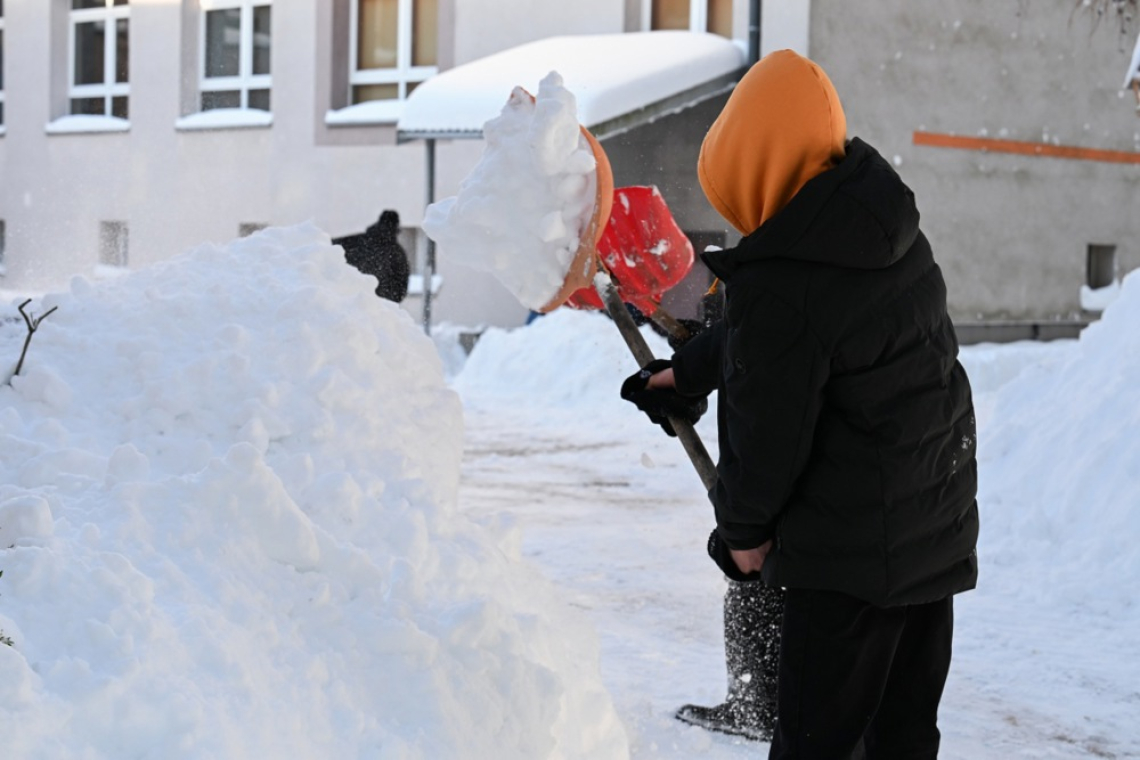
In Croatia, the heaviest snowfall was recorded in Lika, where 60 centimetres were measured in Zavižan, around half a metre in Gospić and nearly 40 centimetres in Delnice. In the capital Zagreb, the snow cover reached 20 centimetres, and city services faced criticism over the slow clearing of roads. City authorities say that main roads are now passable.
At the railway station in Knin, a train on the Zagreb–Split route has been standing for more than 30 hours. Passengers say they received no assistance or basic information, Croatian media report. The stoppage was caused by a combination of weather conditions and fallen trees on the line.
On the A1 motorway between the Sveti Rok and Posedarje interchanges, traffic for all vehicles is completely closed due to snow and gale-force winds.
In Bosnia and Herzegovina, snowfall and rain are also causing widespread problems. In Bosanski Petrovac, where around half a metre of snow has fallen, residents are calling for a state of emergency because roads have not been cleared. In Sarajevo, the city authorities have called on residents to help with snow clearance and are offering one-month temporary jobs to support work on the ground.
In Serbia, further snowfall is expected, with freezing rain in some areas. Several locations in the west of the country have reported being cut off, along with power and water outages.
In Kosovo, heavy precipitation has caused flooding in some areas, mainly in the west of the country. Parts of the area are without electricity and drinking water, and many roads are impassable due to swollen watercourses.
According to forecasts, winter weather will persist in the coming days, bringing continued disruption to transport and supply across many parts of the western Balkans.
